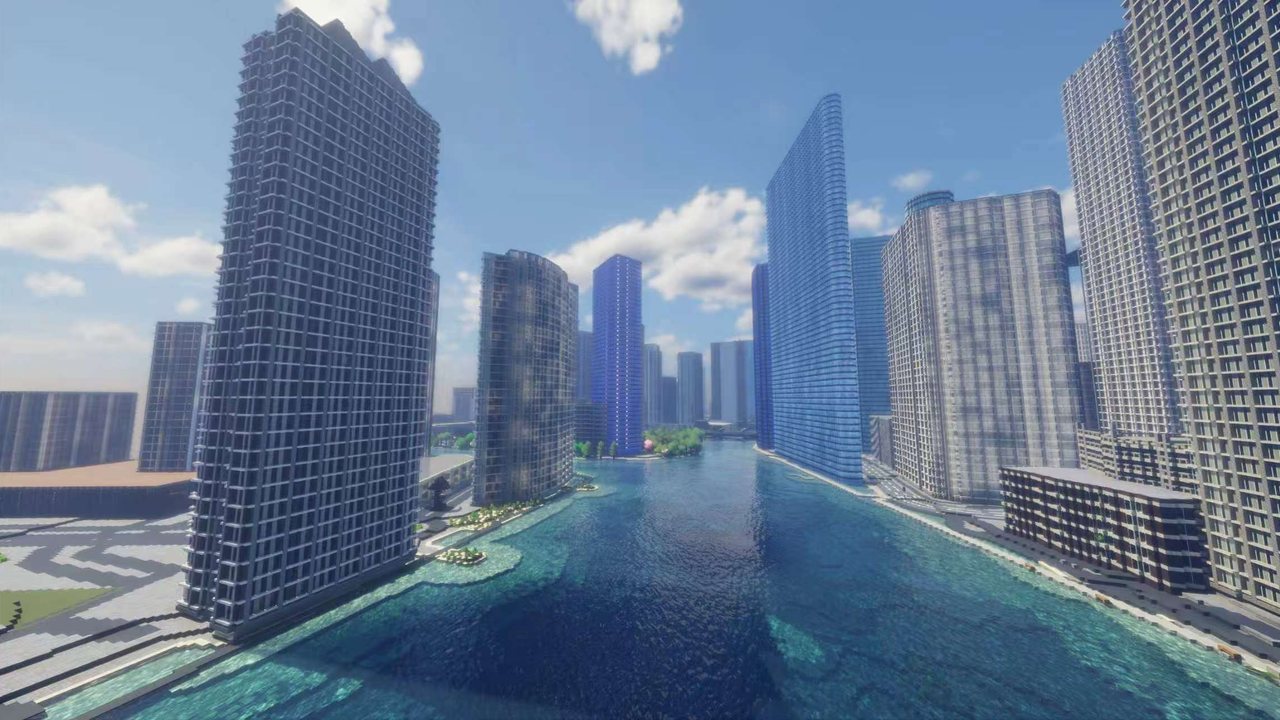
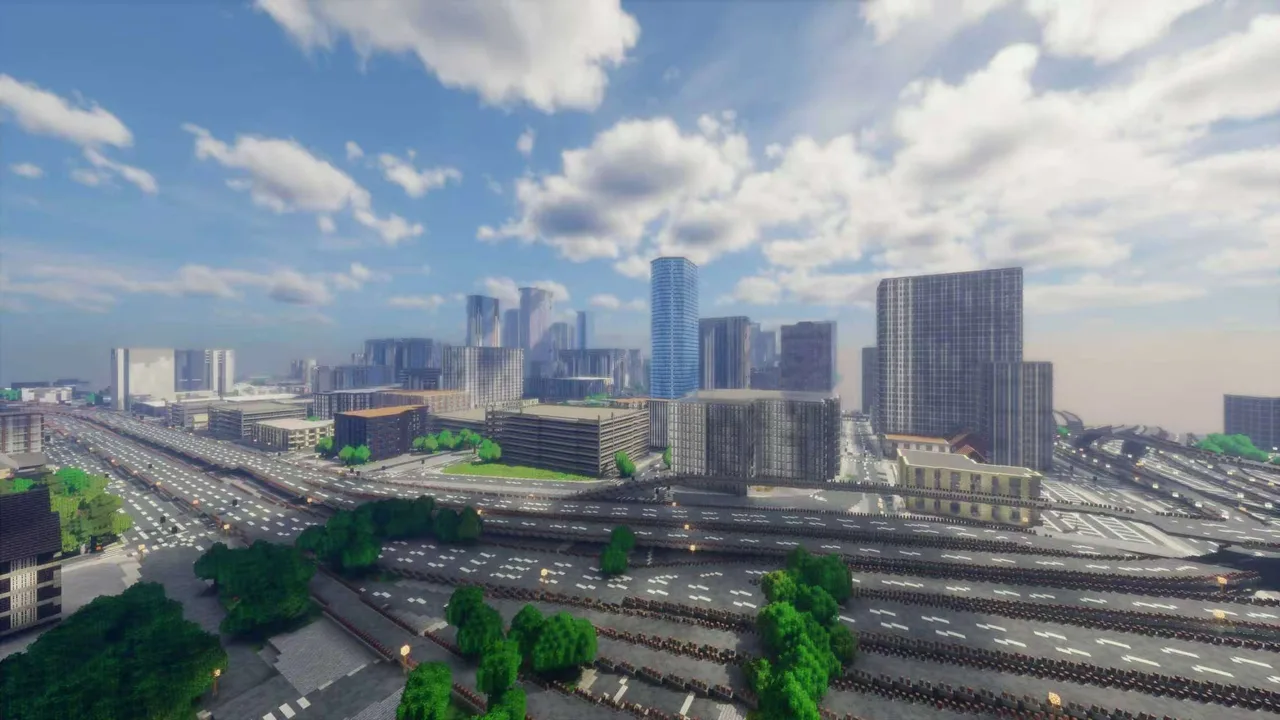
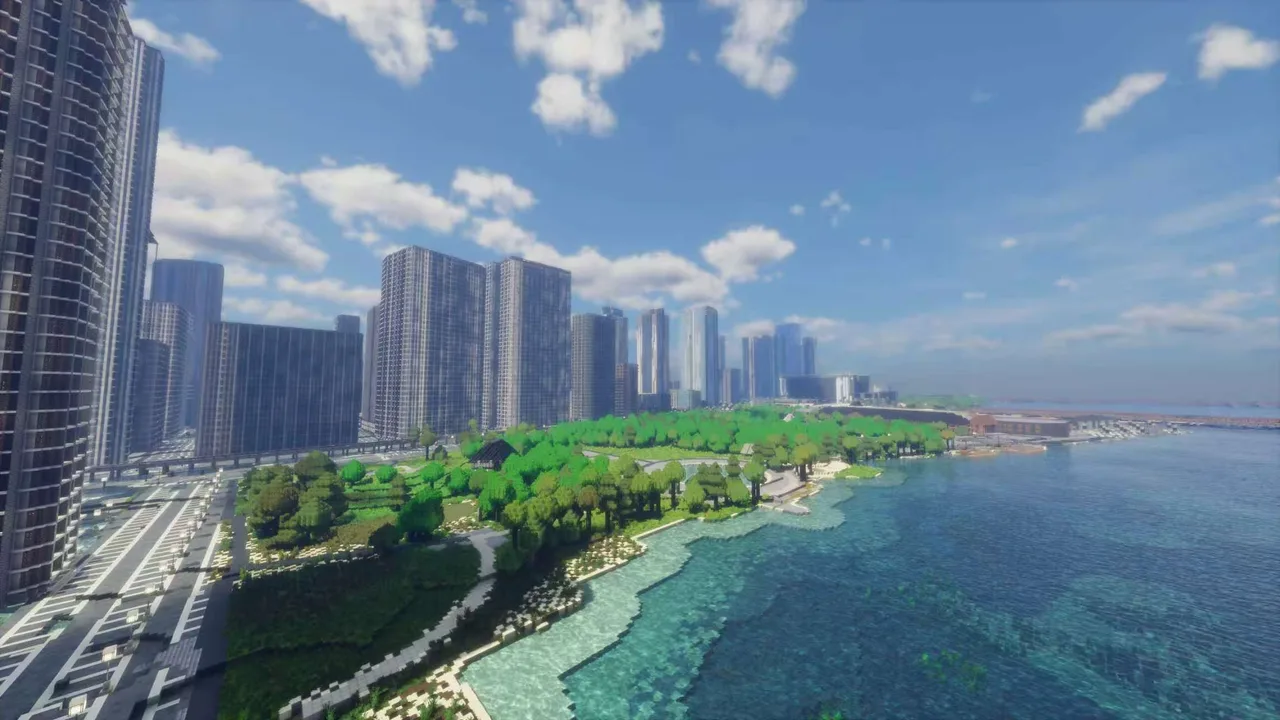
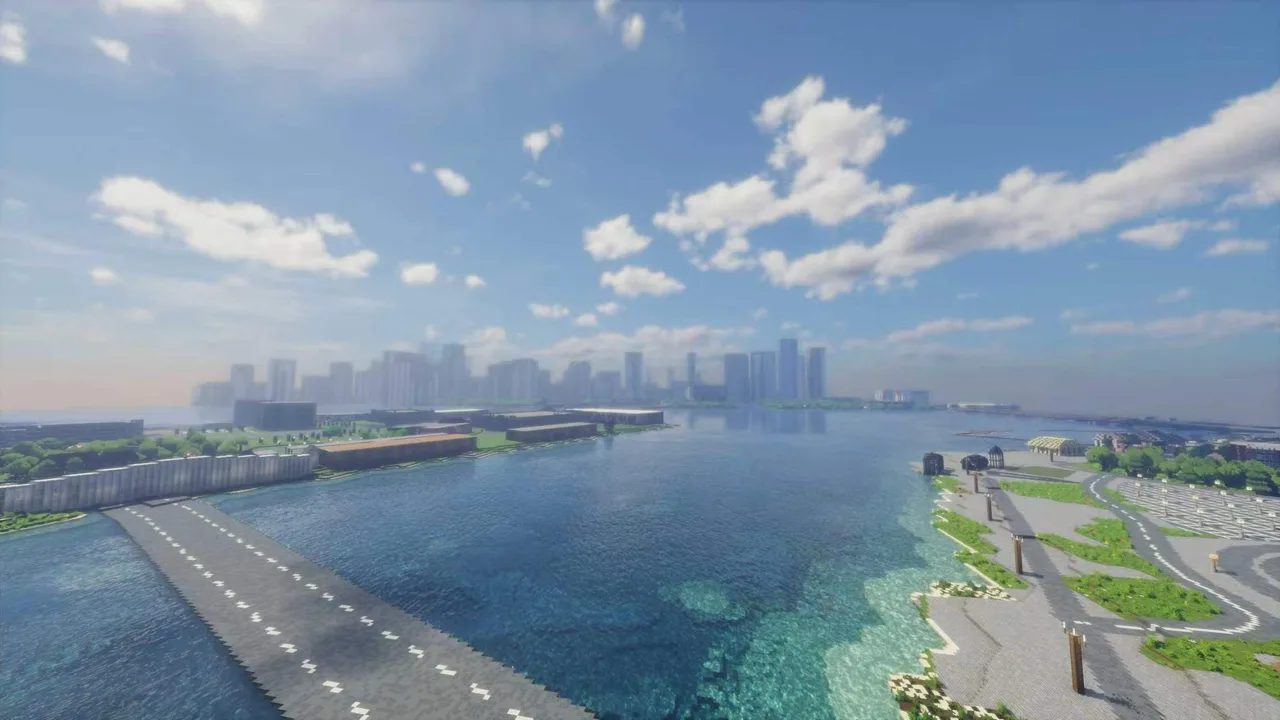
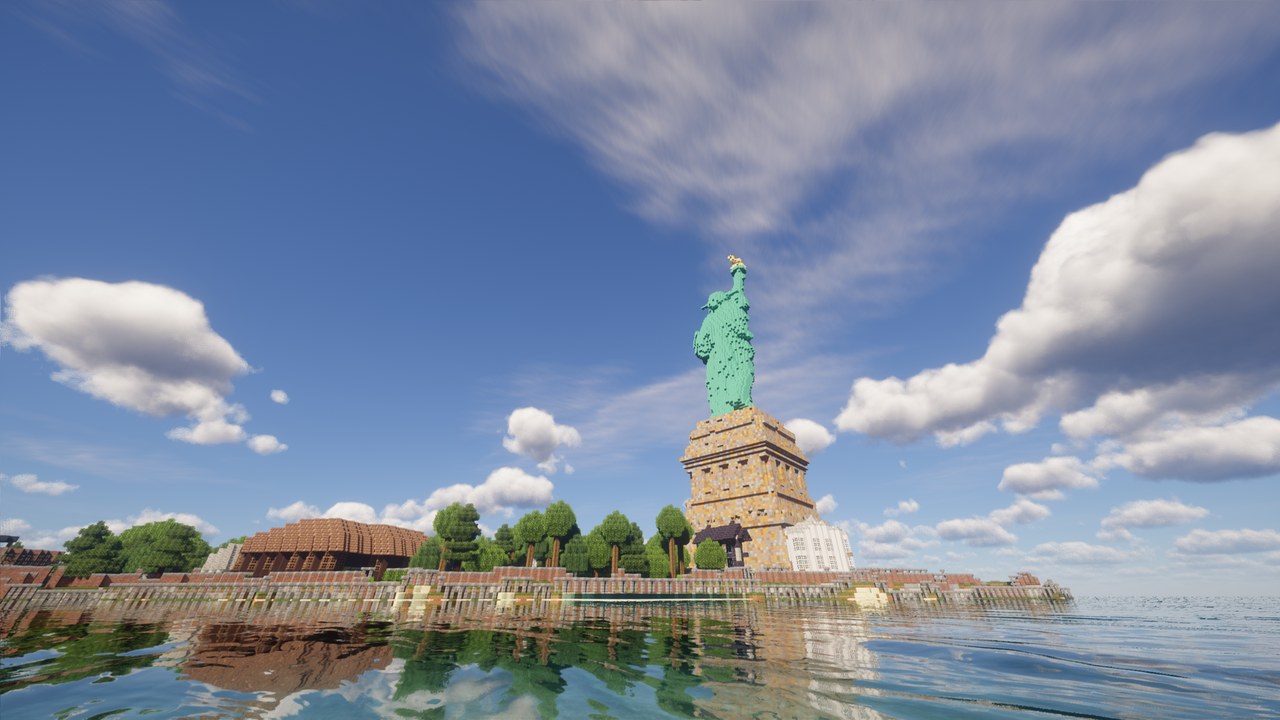
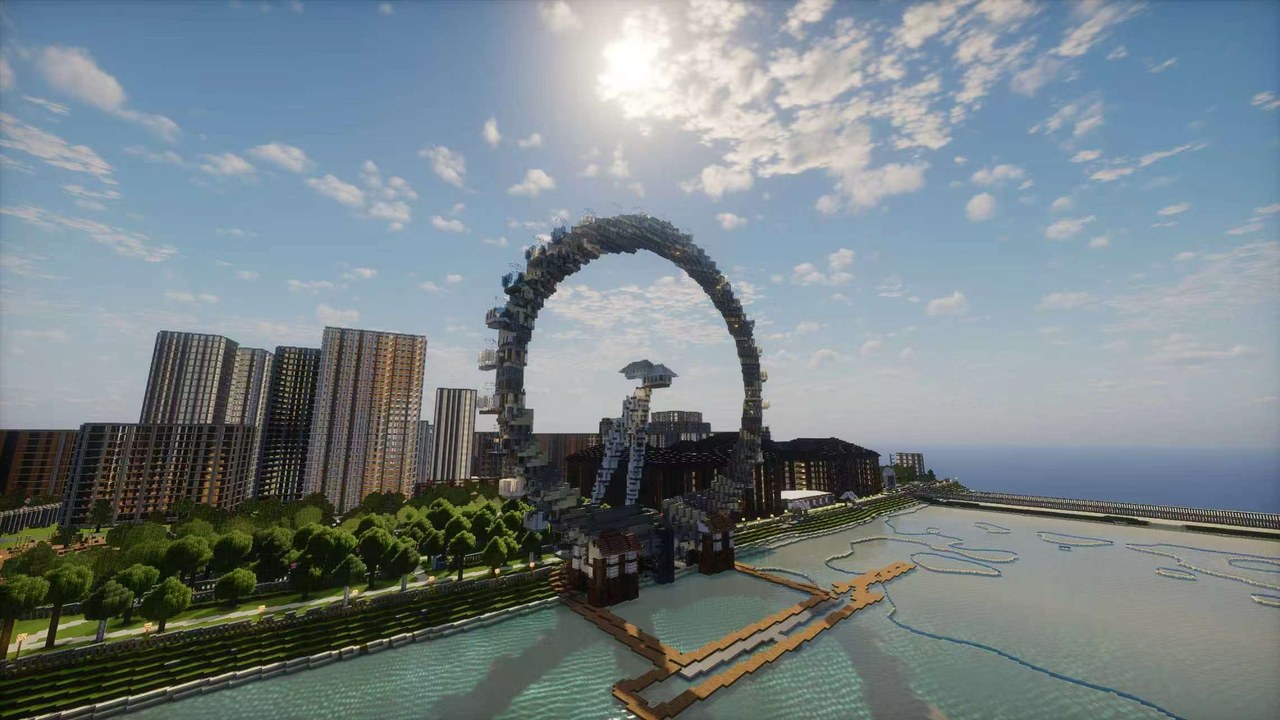
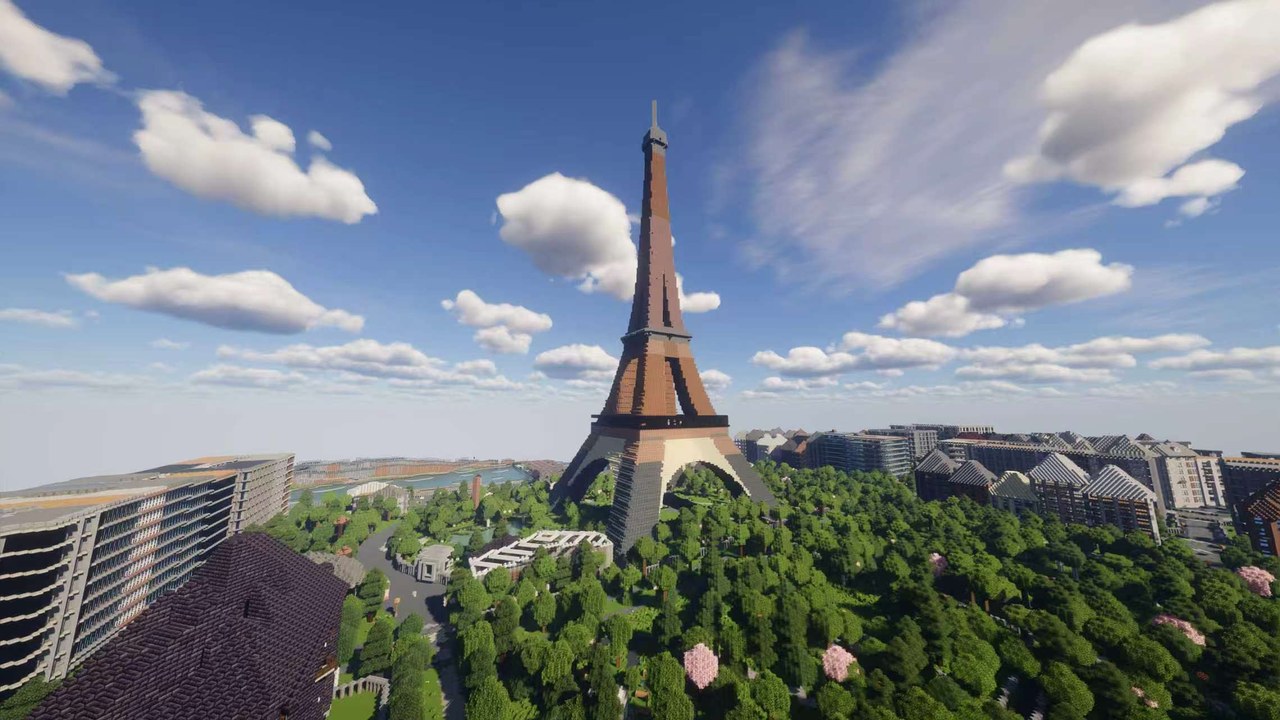
Explore a concentrated 10 km² slice of the downtown district where high-rise blocks meet parks, roads, river channels, and Biscayne Bay. The approved world center sits beside Bayfront Park and Biscayne Boulevard, creating an outdoor starting point near open space rather than inside a generated tower. The screenshots show a water-led city: reflective channels separate dense buildings, shorelines curve around green areas, and major roads connect compact blocks to broader bay views.
The selected boundary reaches across downtown and nearby waterfront districts without claiming the entire city or Miami Beach. Players can use Bayfront Park as a public spawn, turn the bay edge into a marina, connect towers with bridges and transit, or divide the street grid into residential, commercial, and civic projects. Open water creates natural routes for boats and island-style objectives, while the strong skyline makes the world useful for cinematic builds and multiplayer city role-play.
Generated buildings provide exterior massing and mapped footprints, not furnished replicas of every real tower. Builders can add apartments, offices, hotels, rooftop gardens, or a storm-response adventure while keeping the recognizable relationship between water, roads, parks, and downtown blocks. Preserve one untouched world before changing shorelines or towers, then make separate copies for survival, creative planning, events, and server seasons.
A longer community project can grow outward from the park in clear phases. First secure the waterfront and mark safe access to the water; next assign a few representative towers for detailed interiors; finally connect the districts with signs, bridges, transit, and lighting. Avoid filling every open shoreline immediately. Leaving breathing room around parks and water preserves the visual contrast that makes the selected downtown area readable from both street level and elevated viewpoints. Use water-facing overlooks as shared checkpoints so players can compare progress without entering every construction zone. Mark evacuation routes, protect a few public sightlines, and agree on height or lighting rules before several teams begin editing adjacent towers at the same time. Keep shoreline access open so later teams can add docks, events, and public routes without demolishing completed buildings.